


50g Blue Lotus Flower | UK Stock
£14.00
Out of stock
- Estimated Delivery : Up to 5 business days
- Free Shipping & Returns : On all orders over £50
Blue Lotus Flower: Meaning, Uses, and Modern Sourcing
Blue Lotus Flower (Nymphaea caerulea) in One Sentence
A revered psychoactive plant with a long history stretching back to ancient Egypt, blue lotus flower (Nymphaea caerulea) offers a gentle, aromatic route to relaxation, ritual, and reflective calm. For thoughtful adults drawn to herbal wellness, meditation, spiritual ritual, or botanical study, this guide and product overview brings together its history, benefits, sensory profile, traditional and modern uses, preparation methods, sourcing and quality standards, safety and legal points, and the key details to help you choose an authentic blue lotus experience with confidence.
Our Highland Shrooms 50g pouch contains organically sourced, lab-tested dried blue lotus flowers hand-picked from a small farm in the Sri Lankan highlands – whole petals and stamens, carefully preserved for colour, aroma, and integrity.
Why You’ll Love Blue Lotus Flower
These benefits focus on real outcomes rather than technical chemistry – what blue lotus actually brings to your evening, your practice, or your shelf.
- Calming evening ritual – Users report relaxation and enhanced mood from blue lotus tea or bath infusions, making it a natural companion for winding down after a demanding day. Blue lotus was used in traditional medicine for its calming and sedative properties long before modern science began investigating its active compounds.
- Supports reflective, meditative states – This is not a party substance. Blue lotus is used for relaxation and enhanced dream recall, and suits quiet evenings of journaling, gentle breathwork, or seated meditation. The flower represents spiritual awakening and purity in various cultural traditions.
- Rich historical and spiritual symbolism – Blue lotus was used in ancient Egypt for religious rituals, and the blue lotus symbolizes rebirth and creation in ancient Egyptian culture. In Egyptian mythology, the blue lotus flower is associated with the sun god Ra – its blue flowers open during the day and close at night, mirroring the sun’s cycle. Dried blue lotus petals were found in the tomb of King Tutankhamun, and archaeological evidence suggests blue lotus was significant in funerary practices.
- Beautiful sensory experience – Expect a lightly floral, subtly honeyed aroma and a pale blue–violet tint in infusion. The vibrant colour of these nymphaea caerulea flowers comes from flavonoids and anthocyanins that contribute to the flower’s distinctive appearance – a sensory richness that anonymous powders and blue lotus extracts simply cannot match.
- Versatile plant material – Modern uses of blue lotus include herbal teas and tinctures for relaxation, bath rituals, potpourri, altar decoration, and botanical study. Blue lotus is commonly prepared as tea or tincture, and pairs beautifully with complementary botanicals. Always check local laws and safety guidance before any preparation involving human consumption.
Blue lotus is now experiencing renewed interest in herbal wellness and spiritual practices – a bridge between ancient times and contemporary botanical curiosity.
What Makes Our Blue Lotus Flower Different
A huge number of blue lotus products and flowers sold online suffer from serious quality issues. A 2023 chemical composition, market survey, and safety assessment found that many commercial products bore no resemblance to authentic extracts, containing synthetic fragrance components, inflated alkaloid claims about the plant’s key psychoactive compound, or even unlisted synthetic cannabinoids. Blue lotus products may contain unlisted synthetic cannabinoids – a risk that makes sourcing and testing non-negotiable. Misidentified species from the broader Nymphaeaceae family are also routinely sold as the genuine article.
Highland Shrooms is built differently:
- Sri Lankan highland sourcing – Our dried flowers come from a smallholder farm in the Sri Lankan highlands, at altitudes between approximately 1,000 and 1,500 m. Nymphaea caerulea Savigny naturally thrives from sea level up to around 2,700 m, so these highland conditions are well within its native comfort zone. Hand-harvesting takes place in the early morning – before UV and heat degrade delicate pigments and aroma.
- Whole, recognisable petals – You receive intact dried petals and stamens, not anonymous powder. Whole flowers provide visual traceability: you can see petal shape, colour gradation, and stamen structure – markers that help distinguish authentic nymphaea caerulea from look-alikes. Chemical analyses using mass spectrometry show higher nuciferine levels in authentic flowers compared to many processed products.
- Careful low-temperature drying – Shade-drying below 45 °C preserves the anthocyanins responsible for that deep blue–violet colour, along with the floral aroma and antioxidant constituents. High-heat or machine processing destroys both.
- Independent lab checks for purity – Every batch is screened for heavy metals (lead, cadmium, arsenic, mercury), pesticide residues, and microbial load. We confirm the absence of synthetic cannabinoids and solvent residues – a step many sellers skip entirely.
- Ethical, small-batch supply chain – We work directly with a small Sri Lankan farm, paying fair prices and importing in small batches rather than bulk commodity volumes. The main harvest window runs from July through September, aligned with the natural flowering season.
How to Use Blue Lotus Flower
Many traditional preparations for this sacred blue lily exist, and people have worked with the plant for thousands of years. However, safety, legality, and individual sensitivity must always come first. The instructions below assume you have approximately 50g of dried blue lotus flowers on hand. Start with very small amounts – there is limited research on long-term safety data, and blue lotus extracts may vary in composition and are not regulated as medications.
Step 1 – Choose Your Intention
Before opening the pouch, decide what you want from this session:
- Relaxation before bed – a gentle tea infusion (see Step 2)
- Meditative or spiritual ritual – a small-dose infusion paired with quiet practice
- Decorative or altar use – whole petals arranged in water or dry displays (see Step 4)
- Bath ritual – topical, non-ingestive aromatic soak (see Step 3)
- Botanical study – examining petal morphology, colour, and aroma of authentic Egyptian blue lotus
Your intention determines both preparation method and quantity.
Step 2 – Gentle Tea Infusion
This is the most accessible and traditional-feeling method. Traditional Egyptian recipes included steeping blue lotus in wine, but a simple hot water infusion is more common today. Note that regulations in some countries restrict internal use of this plant – always check your local rules.
Use a cautious starting amount: roughly 1–1.5 g of dried petals per 250 ml of hot water, heated to around 85–90 °C (not boiling, which can damage delicate compounds). Blue lotus tea typically requires 2–3 tablespoons of dried flowers for a stronger brew, but we strongly recommend starting at the lower end. Steep for 5–10 minutes. A glass teapot or French press lets you appreciate the pale blue–violet colour as the petals unfurl.
Expect a lightly floral aroma, a subtle flavour that blends well with chamomile, mint, or even hibiscus tea. Effects of blue lotus tea set in within 30–60 minutes for most people, though the onset of blue lotus effects can occur within 15 minutes in some cases.
Do not exceed modest amounts. Consumption can cause sedation and perceptual disturbances, and effects of blue lotus can include hallucinations and euphoria at high doses. If you are considering this for health related purposes, consult a healthcare professional before internal use.
Step 3 – Bath or Topical Ritual
For a non-ingestive way to enjoy the aroma and cultural significance of this blue water lily, try a bath ritual:
- Place 3–5g of dried petals in a muslin bag or reusable tea sock and hang it under the running tap as the bath fills.
- Combine with Epsom salts or a few drops of lavender essential oil for a full-body relaxation soak.
- The warm water releases the floral scent and a hint of colour – an experience that echoes the ancient Egyptians’ own bathing and ritual traditions.
Test on a small skin area first if you have sensitivity to plants in the Nymphaeaceae family.
Step 4 – Decorative & Ceremonial Uses
Whole blue lotus flowers are visually striking in decorative and ceremonial settings:
- Arrange dried petals in a shallow dish of clear water to echo their natural aquatic habitat – a living reference to the Nile region where this lotus flower first gained its sacred status.
- Place whole flowers on an altar space alongside complementary botanicals like red lotus or white lotus flowers.
- Create a smudge-free potpourri by combining a small quantity of dried petals with rose, calendula, and other gentle aromatics.
Blue Lotus Flower Product Details
Everything you need at a glance:
- Botanical name: Nymphaea caerulea (Egyptian blue water lily) – note that the blue lotus is not a true lotus but a species of water lily
- Plant part: Dried flowers (petals and stamens), minimally processed
- Origin: Smallholder farm in the Sri Lankan highlands, Central Province
- Harvest period: Main flowering and harvest season July–September, with a smaller late-season pick if climate allows
- Processing: Hand-picked in the early morning, shade-dried at temperatures below 45°C, graded and sorted by size and colour
- Format and weight: 50g pouch of loose dried flowers – whole plant material, not powder or extract
- Packaging: Resealable, food-grade, recyclable pouch with light and moisture barrier – eco friendly packaging designed to preserve freshness
- Lab testing: Screened for microbial load, heavy metals, and pesticides; confirmed free of synthetic cannabinoids
- Key compounds: Nymphaea caerulea contains the psychoactive alkaloid nuciferine; apomorphine is found in low concentrations in blue lotus. Blue lotus extracts contain aliphatic hydrocarbons and aromatic alcohols alongside flavonoids and other antioxidant constituents
- Shelf life: 18–24 months from packing when stored cool, dark, and dry
- Suggested storage: Airtight container in a cupboard away from direct sunlight and heat sources
Who Blue Lotus Flower Is (and Isn’t) For
This blue Egyptian lotus is not a casual novelty. It suits thoughtful adults who respect traditional plants, are willing to research safety and legal status, and approach new botanicals with curiosity rather than recklessness.
Ideal for:
- Wellness explorers – People already using herbal teas (perhaps sencha green tea or calming blends with valerian root), yoga, meditation, or breathwork who want to add a gentle floral ritual with deep cultural significance.
- Ritual and spiritual practitioners – Those building home altars, working with Egyptian symbolism, blue lotus is linked with sensuality and fertility in ancient Egyptian iconography, or creating ceremonial baths and smoke-free rituals.
- Botanical enthusiasts – Hobbyists who enjoy studying plant morphology and ethnobotany, and who value traceable sourcing of authentic nymphaea caerulea over anonymous flowers sold online.
Who should avoid blue lotus:
- Pregnant or breastfeeding individuals (no safety data available)
- Anyone with significant mental health conditions or altered mental status concerns
- People taking dopaminergic medications (including those for Parkinson’s disease), sedatives, or antipsychotic drug treatments – blue lotus contains apomorphine and nuciferine, both of which have psychoactive effects and may stimulate dopamine receptors
- Anyone in countries or regions where blue lotus is a controlled substance
- Those subject to military or safety-critical drug testing (see FAQ below)
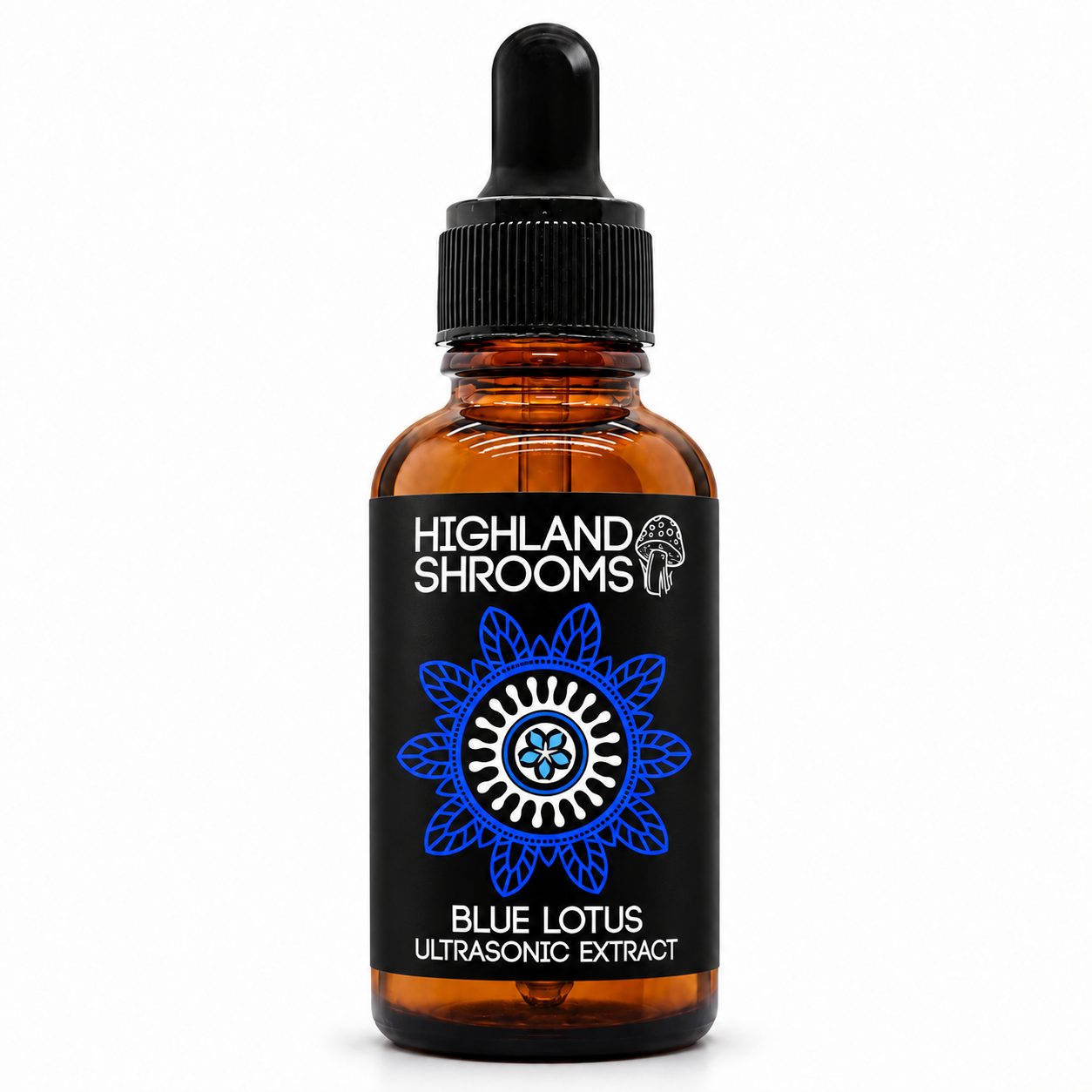
If you’re part of the broader Highland Shrooms or Freshly Fermented community – health-conscious home fermenters expanding into complementary botanicals – this is a natural extension of your apothecary. You might also explore our Blue Lotus Flower Dual Extract Tincture or calming botanicals like mugwort tincture for dream-focused evening rituals.
Frequently Asked Questions about Blue Lotus Flower
Is blue lotus flower legal in the UK? Yes, blue lotus flowers are 100% legal in the UK.
Is it safe to consume blue lotus flower? Blue lotus is not approved as a food or medicine by major regulators like the FSA. No known reports of hospitalisation or death have ever been recorded.
How much blue lotus flower should I use at once? There is no officially established safe dosage. All amounts cited – including the 1–1.5g per 250ml for tea – are based on traditional practice and anecdote, not clinical trials. Start with a small dose and observe your response before increasing. The principle of “start low, go slow” is essential given the limited research. Remember that blue lotus extracts, resins, or concentrated flower extracts may have much higher and more variable bioactive content than whole dried petals – stick with whole plant material for the most predictable experience.
How should I store my 50g of dried blue lotus flowers? Keep them in an airtight container in a cool, dark, dry cupboard – away from strong odours, moisture, and direct sunlight. The blue lotus is known for its antioxidant properties, beneficial for cellular health, but these compounds degrade with improper storage. If your petals fade from deep blue–violet to dull greyish tones, this signals age and oxidation, with reduced aroma and potency. Properly stored, expect 18–24 months of shelf life.
Does blue lotus interact with other herbs, alcohol, or medications? Yes, potentially. Blue lotus may have additive sedative effects when combined with alcohol, sleep aids, or other substances with central nervous system activity. Apomorphine in blue lotus may affect dopamine receptors, which means interactions with Parkinson’s medications, certain mental health drugs, or treatments for erectile dysfunction are plausible. Apomorphine in blue lotus may treat erectile dysfunction in clinical contexts, but self-medicating with an unregulated botanical for this purpose carries real risk – the two compounds (apomorphine and nuciferine) can produce unpredictable psychoactive effects. Keep combinations simple, use a small dose, and always seek explicit medical guidance before mixing blue lotus with prescription medications. Potential benefits do not outweigh unknown interaction risks without professional oversight. The sacred blue lily deserves respect, not recklessness.
Ready to Explore Blue Lotus Flower?
Blue lotus offers something rare: a historically rich, sensory plant with roots in the Nile region and a cultural significance that spans thousands of years – from the ancient Egyptians’ temples and tombs to your own quiet evening ritual. It is a bridge between ancient times and modern botanical curiosity, not a shortcut to anxiety relief or a substitute for medical care.
Before you brew, check both your local legal status and your own health situation. Responsible, informed use is the only kind worth pursuing with any psychoactive plant.
Our Highland Shrooms 50g pouch of dried blue lotus flowers from the Sri Lankan highlands is lab-checked, whole-petal, and ready for your ritual toolkit – with fast UK/EU delivery.
Add blue lotus flowers to your ritual toolkit.
Secure checkout. Fast shipping. Lab-tested quality.
Related products
-

-

-


White Lotus Flowers (50g)
£15.00 -

Red Lotus Flowers (50g)
£15.00