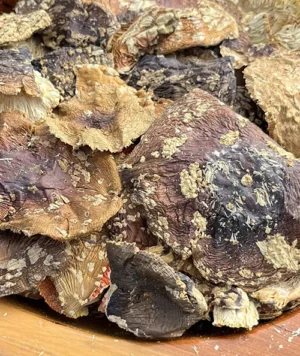

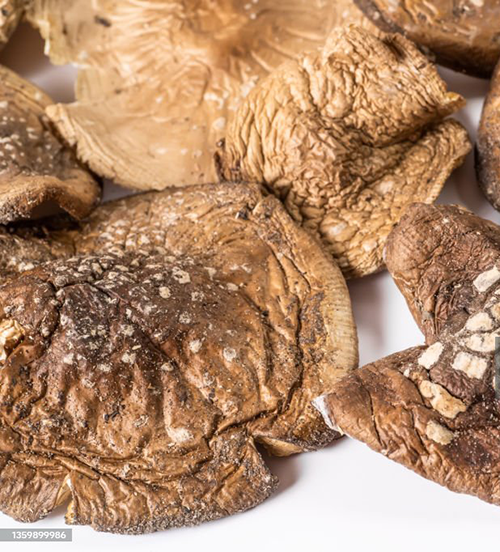
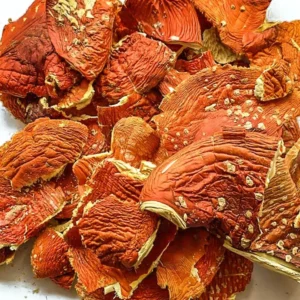
25g Dried Amanita Pantherina Dried Whole Caps
£40.00
7 in stock
- Estimated Delivery : Up to 5 business days
- Free Shipping & Returns : On all orders over £50
Amanita pantherina (Panther Cap) – Botanical Research Guide & Product Overview
Highly Potent, Strictly Non-Food Amanita pantherina (25g) in Brief
Highland Shrooms offers 25g of carefully dried Amanita pantherina caps as a botanical and mycological research specimen – nothing more. This product is NOT for human or animal consumption and must never be used as food, a supplement, tea, extract, or intoxicant. Amanita pantherina should never be consumed due to its toxicity, and we sell it exclusively for non-ingestive study.
This guide walks researchers through the species’ identity, ecology, toxicology, morphological features, and safe handling protocols so you can work with this material responsibly. Our panther cap specimen sits in a specialist “botanical research” category.
Why Researchers Choose Our Amanita pantherina (Panther Cap)
Whether you are a university demonstrator, a serious amateur mycologist, or a lab-based researcher, a reliable dried reference specimen saves time and sharpens identification skills. Here is what makes our 25g offering a sound choice for non-ingestive study.
- Consistent, identifiable morphology – Dried caps are selected to retain visible diagnostic traits: the characteristic brownish cap surface, white warts, veil remnants, and gill structure. These features support teaching, photography, and microscopy work year-round, independent of fruiting season.
- Careful sourcing and handling – Mushrooms are collected from verified Amanita pantherina habitats in European mixed and coniferous woodlands and air-dried at controlled temperatures to preserve structural features. They are not prepared as food at any stage.
- Ideal for non-ingestive study – The specimen is suited to morphological comparison, spore examination, photographic documentation, and comparative identification practice – nothing else.
- Clear ethical and legal positioning – Highland Shrooms explicitly discourages any ingestive or recreational use. Our labelling, packaging, and product pages all reinforce this warning, helping serious researchers distance their work from misuse.
What Sets Our Panther Cap Product Apart
Many online Amanita listings blur the line between “research material” and recreational use, sometimes hinting at psychoactive effects or sharing dosage information. We take a fundamentally different approach.
- Strict “not for consumption” policy – Packaging, the product page, and this article all state plainly that our 25g Amanita pantherina is for botanical research only. It is classified as poisonous in all references, and we treat it accordingly.
- No health, high, or therapeutic claims – We do not advertise effects, dosages, or experiential reports. The focus remains on taxonomy, ecology, and safety awareness.
How to Use Amanita pantherina for Botanical Research (Not Consumption)
All steps below describe non-ingestive, observational, or microscopic use only. This material must not be eaten, brewed, smoked, or extracted for human use.
- Unpack and label safely Open the pouch in a clean, well-ventilated space away from kitchens and food preparation areas.
- Macroscopic study Examine cap colour (dark brown to olive-brown), the distribution of white warts, gill arrangement, stipe base, and ring. Photograph specimens alongside a ruler or scale card to create teaching resources or field-guide comparison images.
- Microscopic and spore work Prepare spore prints on both dark and light paper. Mount small sections of gill tissue in water or Melzer’s reagent and observe spore shape (broadly ellipsoid, typically 7–10 μm) and basidia structure under a compound microscope.
- Comparative identification practice Compare your dried panther cap to field-guide images of related species – amanita muscaria (the fly agaric, with its red cap and white warts), amanita rubescens (the blusher, whose flesh reddens when bruised), and other brown-capped fungi. Focus on distinguishing stipe base, volva structure, and cap margin striations.
- Long-term storage and record-keeping Return specimens to an airtight container with silica gel. Record purchase date, batch number, and any morphological observations in a research notebook. Proper storage can preserve research value for one to two years or more.
Product Details – Amanita pantherina 25 g Dried Caps
This section is kept factual and scannable for quick reference.
| Detail | Specification |
|---|---|
| Material / Format | 25 g of whole or large-segment dried Amanita pantherina fruiting bodies (primarily caps), supplied as a botanical research specimen |
| Cap size range (fresh) | Panther Cap has a cap diameter of 3–10 cm; typical original cap diameters up to approximately 12 cm before drying; drying reduces size but preserves proportion and wart distribution |
| Appearance | Brown to olive-brown caps with pale, discrete, sharply defined white warts; white gill remnants visible on broken edges; occasional stem fragments with bulbous base and volval ridges |
| Stipe (when present) | Amanita pantherina has a white stem measuring 6 to 12 cm tall, which features a smooth upper ring; stipe height of 5–15 cm in fresh specimens |
| Spore print | White |
| Packaging | Heat-sealed, opaque or UV-resistant pouch with a prominent “Poisonous – Not for Consumption” warning label |
| Origin | Harvested in mixed and coniferous woodlands in Europe (Central and Eastern European forests), from naturally occurring populations |
| Intended use | Morphological, taxonomic, photographic, and microscopic study – not for food, supplements, smoking, extraction, or any form of ingestion |
| Storage | Below 25 °C, dry, airtight, away from children, pets, and all food items |
Understanding Amanita pantherina as a Species
Amanita pantherina, commonly known as the panther cap, is a poisonous ectomycorrhizal mushroom of considerable ecological and toxicological interest. It is frequently confused with edible species due to its appearance, which makes understanding its taxonomy and life history essential for anyone working with fungi.
Taxonomic position – Kingdom Fungi, phylum Basidiomycota, class Agaricomycetes, order Agaricales, family Amanitaceae, genus Amanita, section Amanita, within the modern Amanita group used in current classification. The basionym Agaricus pantherinus DC. appeared in 1815; the current accepted name Amanita pantherina (DC.) Krombh. was established in 1846 and is indexed in major databases including Index Fungorum.
Common names and synonyms – “Panther Cap” (English), “Amanite panthère” (French), “Pantherpilz” (German). The older synonym Agaricus pantherinus is still found in historical literature and herbarium records.
Key distribution – The species has a Holarctic range. It is widespread across much of Europe, extends into western Asia, and is found in North America – particularly the Pacific Northwest and parts of eastern North America. Reports also exist from highland forests in Mexico south to Uruguay. Amanita pantherina typically fruits from late summer through autumn.
Ecological role – Amanita pantherina is ectomycorrhizal, forming mutualistic relationships with tree roots. It grows in association with deciduous and coniferous trees such as beech, oak, chestnut, spruce, and fir, aiding nutrient exchange and supporting forest health. It commonly grows on acidic to neutral soils.
Conservation status – As of 2026, the species is generally considered common and is not listed as threatened. It holds “Least Concern” status in several European databases and “Secure” (S5) ratings in multiple Canadian provinces.
Genetic diversity – Phylogenetic studies using ITS and β-tubulin gene regions have shown that what is called A. pantherina separates into at least two major clades: a Eurasian lineage and a North American lineage, likely reflecting historical dispersal via land bridges and subsequent regional isolation.
How to Recognise Amanita pantherina (Identification for Safety)
⚠️ Warning: Improper identification of brown-capped Amanitas can be fatal. This section is informational and does not replace expert training or consultation with a qualified mycologist.
Cap characteristics – The cap of Amanita pantherina typically measures 5 to 12 cm in diameter and has a brown color with white spots. The cap color ranges from dark brown to olive-brown, sometimes with an olive tinge in older specimens. Panther Cap features white, discrete, sharply defined warts – remnants of the universal veil. Critically, these warts can wash off in heavy rain, making older or weather-beaten specimens harder to identify. The cap margin shows short, distinctive striations.
Gills and spore print – The gills of Amanita pantherina are white and free from the stem, crowded together. The spore print is white, a useful feature for differentiating panther cap from some other genera.
Stem and base – The stipe is white, smooth, and bears a fragile ring (partial veil remnant). Amanita pantherina has a distinct bulbous base with a pronounced rim or gutter – a key diagnostic feature formed by the volva. These raised volval ridges or bands around the base are among the most reliable identification markers.
Flesh – The flesh of Panther Cap is white and does not change color when cut. This is an important distinction from the blusher (amanita rubescens), whose flesh reddens when bruised.
Potential lookalikes – The panther cap shares a general silhouette with several species. Amanita muscaria (fly agaric) has a red cap rather than brown but the same white warts. Amanita rubescens (the blusher) has a similar brownish cap but its flesh turns pink to reddish when damaged. Young specimens of Macrolepiota procera (parasol mushroom) – an edible species – have also been confused with panther cap, with poisoning case reports documenting this kind of misidentification.
Why cap colour alone is unreliable – Fading with age, weathering that can wash away the characteristic warts, and natural variability between populations mean that cap colour alone should never be the sole basis for identification. Always examine multiple features: volva structure, ring, gill attachment, spore print, and flesh colour change.
Toxicology and Safety: Why Panther Cap’s Ibotenic Acid Means It Must Never Be Eaten
This section exists to build toxin awareness and prevent poisoning. It underpins our strict “not for consumption” stance for every unit we sell.
Key compounds – Ibotenic acid and muscimol are the main toxic compounds present in Amanita pantherina. Ibotenic acid is an NMDA-type glutamate receptor agonist that can cause agitation and seizures at high doses. Muscimol acts as a GABA agonist, promoting calmness and sedation at lower levels but producing dangerous central nervous system depression at higher exposures. The psychoactive effects of Panther Cap are unpredictable, varying dramatically with individual physiology and toxin concentration.
Stability of toxins – Muscimol is chemically stable and not destroyed by cooking. Drying can convert ibotenic acid into muscimol through decarboxylation, meaning that neither cooking nor drying makes Amanita pantherina safe. Cooking does not eliminate the toxicity of Amanita pantherina – this point cannot be overstated.
Differences from deadly amatoxin Amanitas – The panther cap produces a primarily neurotoxic syndrome, distinct from the liver-destroying amatoxins found in species like Amanita phalloides (death cap).
Risks to pets and wildlife – Dogs are particularly vulnerable to accidental ingestion of panther cap in gardens or parks. Clinical data show similar neurological symptoms in animals as in humans, and smaller body mass means a proportionally greater risk from even partial consumption.
Who This Product Is (and Is Not) For
Ideal users:
- Serious amateur mycologists building a reference collection of toxic fungi
- University demonstrators and educators who need physical specimens for teaching safe identification
- Microscopy clubs studying spore morphology, gill structure, and Amanita taxonomy
- Photographers creating field-guide resources or cultural documentation of European forest species
Not suitable for:
- Anyone seeking edible mushrooms, dietary supplements, sleep aids, or psychoactive experiences
- Anyone intending to brew, cook, extract, or otherwise prepare Amanita pantherina for ingestion
Frequently Asked Questions about Amanita pantherina (Panther Cap)
These FAQs address the most common concerns around safety, use, and differences from other Amanita species.
Is your Amanita pantherina safe to eat if I cook or brew it?
No. This product is sold strictly for botanical research. Ibotenic acid and muscimol – the principal toxic substances – are not reliably destroyed by cooking, boiling, or drying. Muscimol in particular is heat-stable. We forbid any ingestive use and label the product accordingly.
How is this different from Amanita muscaria (fly agaric)?
Both species share ibotenic acid and muscimol as their main neuroactive compounds, and both belong to the same genus and section within the family Amanitaceae. The key visual difference is cap colour: the panther cap has a brown cap with white warts, while the fly agaric (amanita muscaria) has a red to orange-red cap with white warts. Their ecological ranges overlap in Europe and North America, though muscaria is more commonly found across boreal and temperate forests worldwide. Neither species should be consumed, and both are treated as poisonous in modern field guides.
Can I use this Amanita pantherina in food fermentation experiments?
Absolutely not. Toxic mushrooms must never be included in any food or beverage fermentation.
How should I store Amanita pantherina safely at home?
Keep specimens in airtight containers clearly labelled as poisonous. Store in a locked cupboard out of reach of children and pets, never alongside spices, food ingredients, or edible supplements. Maintain conditions below 25 °C with low humidity, and include silica gel packets to absorb moisture. First-time buyers should begin by sealing and labeling the specimen before placing it in storage.
Can Amanita pantherina be cultivated like an oyster or shiitake mushroom?
No. Amanita pantherina is an ectomycorrhizal species that requires living tree roots to form its symbiotic associations. It cannot be grown reliably on standard home substrates or mushroom-growing kits.
Responsible Research with Amanita pantherina
Amanita pantherina is a fascinating but dangerous mushroom – one of the most commonly misidentified toxic species in European and North American woodlands. It is best approached as a study subject, never as food.
If you are a serious researcher or educator looking for a well-documented, traceable reference specimen, our 25g dried Amanita pantherina caps provide the morphological detail you need for taxonomy, microscopy, and comparative identification work.
Explore our Amanita pantherina research specimen for safe, edible fermentation you can enjoy every day.
Secure checkout. Fast shipping. Clearly labelled. Responsibly sold.
Related products
-
-
-

-
Amanita Regalis Extract | Dual Extracted Ultrasonic Extract 50ml
Original price was: £25.00.£15.00Current price is: £15.00.